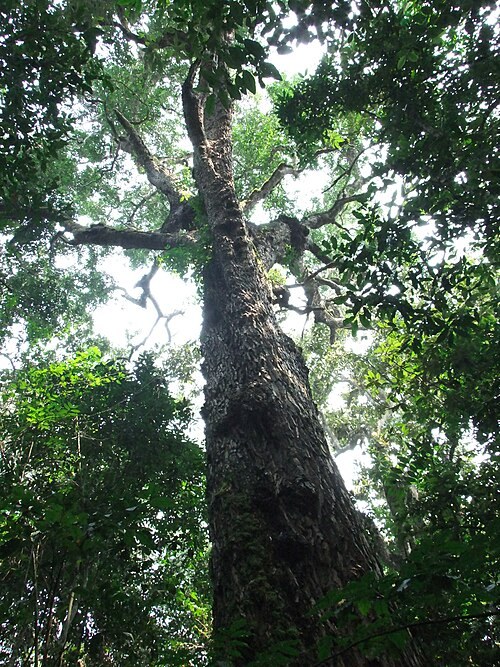
Looking up through the forest canopy in Kibale National Park.
Photo: Dror Feitelson · Wikimedia Commons · CC BY-SA 3.0. Resized and compressed; displayed crops may vary.A sense of the place
Kibale rewards visitors who enjoy discovering wildlife through sound, movement and patient observation. Its forest canopy hides a busy world, and a walk can change quickly from a quiet study of trees to an energetic search for activity overhead. Chimpanzees are the headline attraction, yet the wider experience is about entering a habitat where the smallest details help tell the story. It is an appealing contrast to a savannah safari, replacing long views with a more immediate connection to the forest around you.
Landscape and character
The park is known for its diversity of primates. Different monkeys use different layers of the vegetation, while birds, butterflies and plants add interest beyond the larger animals. Looking up can be as important as looking ahead. Forest photography can involve deep shade, bright gaps in the canopy and subjects that keep moving, so flexibility matters more than a fixed shot list. A guide’s explanations can help visitors appreciate a sighting that might otherwise pass unnoticed.
What to experience
Guided chimpanzee tracking is a focused activity that requires advance arrangements. The animals move freely, and the walking, waiting and viewing conditions depend on where they are found. Ask about the current briefing, participation requirements and permit arrangements rather than relying on an old timetable. Visitors who want a broader nature experience can discuss forest walks and birding, with each activity clearly distinguished from a chimpanzee tracking reservation.
How to shape your visit
Kibale can be paired with nearby Bigodi Wetland Sanctuary to experience two different environments. Bigodi is a separate community-run destination and should have its own guiding arrangements. When planning your stay, consider whether to keep an afternoon free after tracking or include an additional outing. The best balance depends on your walking comfort, photographic interests and willingness to make early starts on consecutive days.
Practical planning
Before choosing dates, share your travel party, interests, preferred comfort level and the amount of walking you enjoy. Ask for a written proposal that identifies the meeting point, transport, guide arrangements, accommodation if needed, and exactly which activities are included. Current access, fees and reservations should be checked for your intended visit; this guide does not show live availability. Give wildlife space, follow local guidance and ask permission before photographing people. Leave time for the unexpected, including moments when the most rewarding choice is to stop and watch rather than hurry towards the next item on a list.
Destination reference: Uganda Wildlife Authority ↗. Guide reviewed 19 October 2026. Descriptions are for trip inspiration; specific services are confirmed in your proposal.