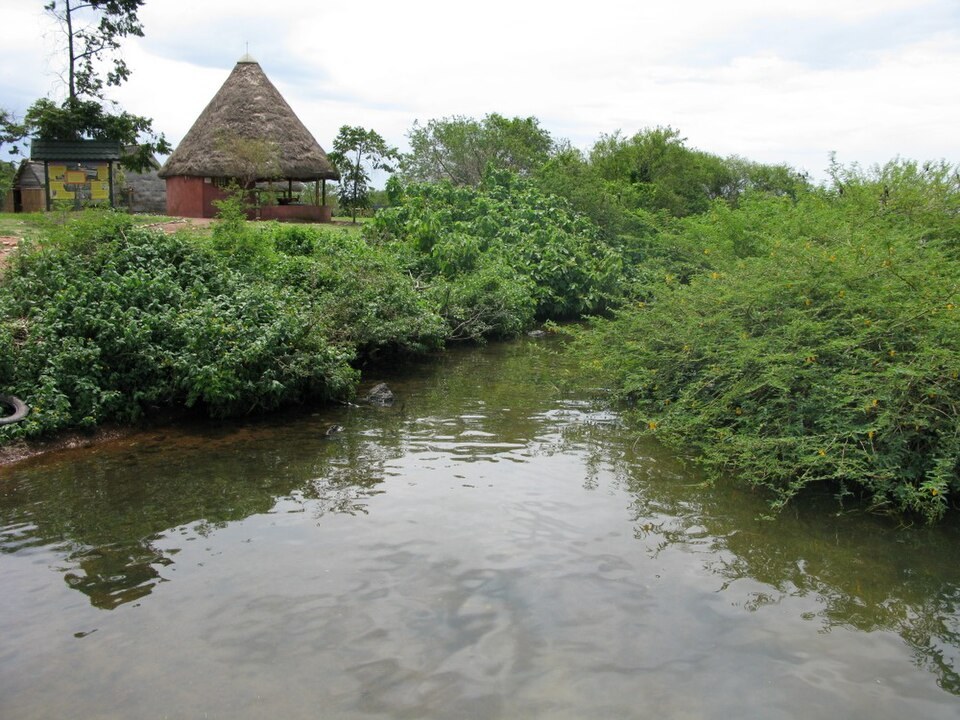
Part of the lakeside camp at Ngamba Island Chimpanzee Sanctuary.
Photo: Eduard Grebe - Maanscyn · Wikimedia Commons · CC BY 2.0. Resized and compressed; displayed crops may vary.A sense of the place
Ngamba Island offers a chance to learn about chimpanzees in a sanctuary setting, surrounded by Lake Victoria. Its purpose and visitor experience differ from tracking wild chimpanzees in a forest national park. Understanding that distinction is part of planning a meaningful visit. The interest lies not only in observing animals, but in hearing why a sanctuary is needed and how long-term care connects with wider conservation questions.
Landscape and character
The Chimpanzee Trust describes Ngamba as a sanctuary for rescued chimpanzees. The island setting gives the journey its own character, with the transfer and managed visitor programme forming part of the day. This is not an invitation to enter the animals’ space independently or expect direct contact. Visitor boundaries are there to support the welfare of the chimpanzees and the operation of the sanctuary.
What to experience
Before booking, ask what the current visitor programme includes, where guests observe from and how the island transfer is arranged. A good visit can be shaped around listening, asking questions and appreciating behaviour without disturbing the animals. Families should discuss age-related participation requirements and practical needs with the operator in advance rather than assuming that every part of the programme suits every traveller.
How to shape your visit
An Entebbe stay may provide a useful starting point for discussing Ngamba. Give the lake transfer and return journey enough room, and avoid creating a tight connection with a flight. Ask about the arrangements if weather affects travel and which costs are included in the proposal. Sanctuary visits and wild forest tracking can both be valuable experiences, but each should be presented clearly for what it is.
Practical planning
Before choosing dates, share your travel party, interests, preferred comfort level and the amount of walking you enjoy. Ask for a written proposal that identifies the meeting point, transport, guide arrangements, accommodation if needed, and exactly which activities are included. Current access, fees and reservations should be checked for your intended visit; this guide does not show live availability. Give wildlife space, follow local guidance and ask permission before photographing people. Leave time for the unexpected, including moments when the most rewarding choice is to stop and watch rather than hurry towards the next item on a list.
Destination reference: Official destination or managing organisation information ↗. Guide reviewed 19 October 2026. Descriptions are for trip inspiration; specific services are confirmed in your proposal.