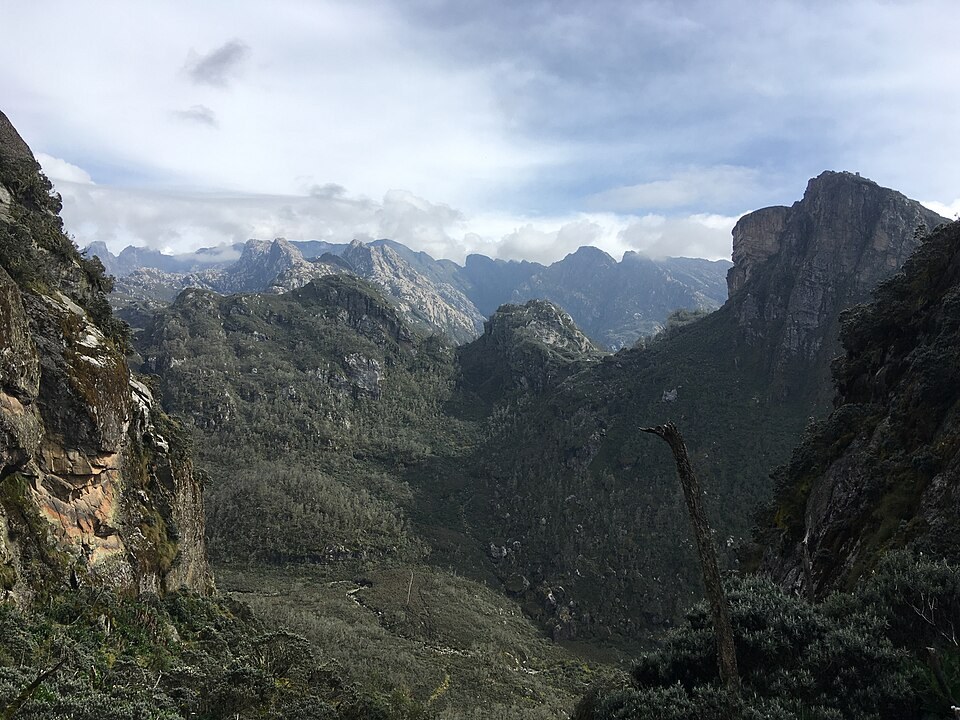
Rocky mountain scenery in the Rwenzori Mountains National Park.
Photo: GarethBessant · Wikimedia Commons · CC BY-SA 4.0. Resized and compressed; displayed crops may vary.A sense of the place
The Rwenzori Mountains offer a journey built around movement through changing landscapes. A visit is not defined only by a summit; it can be about following a trail from cultivated foothills towards forest, encountering unfamiliar plants or watching cloud move across a valley. This makes the destination interesting to walkers, photographers and travellers who want a mountain element in their Uganda itinerary. The level of ambition should follow the experience and comfort of the participants, rather than an assumption that everyone must aim for the highest point.
Landscape and character
The range lies along Uganda’s western border with the Democratic Republic of Congo. Within the park, altitude brings changes in vegetation, including mountain forest and moorland with distinctive plants. The high peaks form a dramatic backdrop, but clouds and weather influence what visitors see. This is a landscape where textures can be as compelling as panoramas: moss, branching plants, wet rock and shifting light all contribute to its character.
What to experience
Discuss the difference between a shorter nature-oriented walk, a multi-day trek and a technical mountaineering objective. They demand different preparation, equipment and support. A route should be selected with appropriate professional guidance, and current trail conditions should be part of the conversation. Ask what the proposed experience actually involves each day, including the walking, overnight arrangements and support team, instead of judging it only by the destination name.
How to shape your visit
A mountain trip deserves time around it. Consider whether you want a rest day before or after trekking and how it fits with other safari activities. Scenic stays in the wider region can provide an alternative for companions who do not share the same walking ambitions. Request a clear distinction between activities inside the national park and experiences in neighbouring communities or foothill areas, so everyone understands the proposed journey.
Practical planning
Before choosing dates, share your travel party, interests, preferred comfort level and the amount of walking you enjoy. Ask for a written proposal that identifies the meeting point, transport, guide arrangements, accommodation if needed, and exactly which activities are included. Current access, fees and reservations should be checked for your intended visit; this guide does not show live availability. Give wildlife space, follow local guidance and ask permission before photographing people. Leave time for the unexpected, including moments when the most rewarding choice is to stop and watch rather than hurry towards the next item on a list.
Destination reference: Uganda Wildlife Authority ↗. Guide reviewed 19 October 2026. Descriptions are for trip inspiration; specific services are confirmed in your proposal.