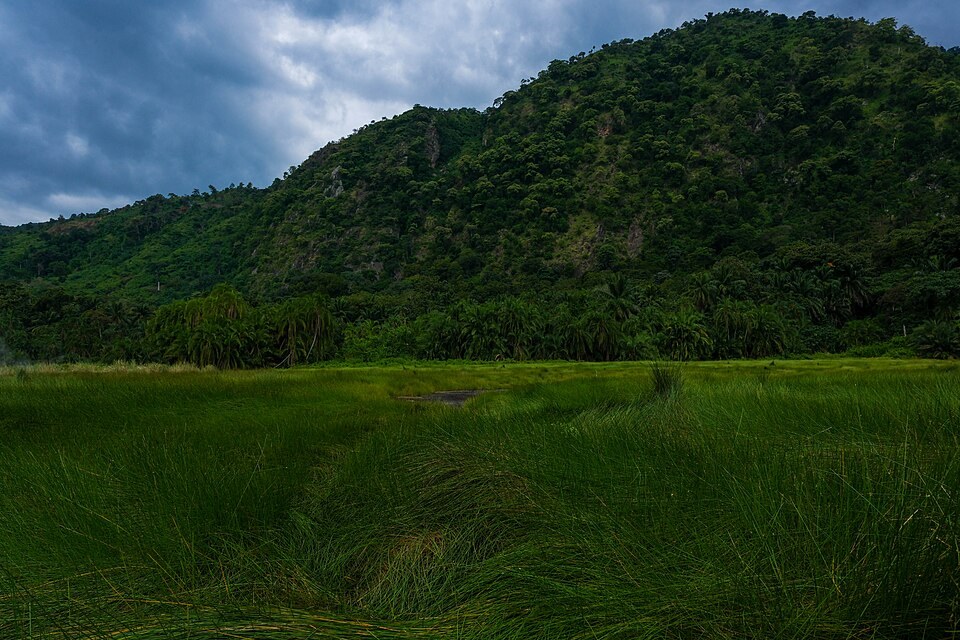
Vegetation and a wooded hillside photographed in Semuliki National Park.
Photo: Timothy Akolamazima · Wikimedia Commons · CC BY-SA 4.0. Resized and compressed; displayed crops may vary.A sense of the place
Semuliki introduces a different forest atmosphere to a Uganda nature journey. Set on the western side of the Rwenzori region, it is associated with lowland tropical rainforest and ecological connections to the Congo Basin. The experience is less about sweeping game-drive views and more about entering a complex, shaded environment. Visitors who enjoy plants, birds and the interpretation of a habitat may find it especially rewarding, because much of its interest appears through detail rather than spectacle.
Landscape and character
The forest and its wetter areas help explain why this destination feels different from a mountain forest or open savannah park. Water shapes the environment, and conditions underfoot can change with rainfall. The Sempaya hot springs are a recognised attraction, adding a striking geological element to a forest visit. They should be approached through the relevant managed visitor arrangements, with guides explaining where visitors may go and how to enjoy the site responsibly.
What to experience
A guided walk allows time to notice bird calls, vegetation and the transition between different parts of the landscape. Birdwatchers may prefer a focused outing with a guide who understands their interests, while general nature travellers can enjoy an introduction to the forest without turning the visit into a technical survey. Let the planning team know what you hope to learn, not simply which animals you hope to see.
How to shape your visit
Semuliki can be considered within a western Uganda trip, but it should not be confused with Toro-Semliki Wildlife Reserve, which is a separate destination. Confirm the exact place named in a proposal, the activity meeting point and the accommodation base. Allow enough time for a forest visit to unfold without a tightly scheduled onward transfer. That simple choice can make the experience calmer and easier to appreciate.
Practical planning
Before choosing dates, share your travel party, interests, preferred comfort level and the amount of walking you enjoy. Ask for a written proposal that identifies the meeting point, transport, guide arrangements, accommodation if needed, and exactly which activities are included. Current access, fees and reservations should be checked for your intended visit; this guide does not show live availability. Give wildlife space, follow local guidance and ask permission before photographing people. Leave time for the unexpected, including moments when the most rewarding choice is to stop and watch rather than hurry towards the next item on a list.
Destination reference: Uganda Wildlife Authority ↗. Guide reviewed 19 October 2026. Descriptions are for trip inspiration; specific services are confirmed in your proposal.